Introduction
The inspiration for this page is the story, “When
Lincoln Kissed Me,” by author Henry Wing. Wing was at that time a
correspondent for the New York Tribune; present with other reporters at
the Battle of the Wilderness. As the youngest man on the team, he
is selected and entrusted to carry the precious news reports
through no man’s land, to the nearest telegraph office he can find, and
deliver the important dispatches to the paper’s home office in New
York. This story was included in the Thirteenth Regiment
Association Circular #29, November 25, 1916. The stories in these
Circulars
were of interest to the 13th MA Veterans so it seemed appropriate to
include it on the website.
Lt. Morris Schaff, of General G. K. Warren’s staff was
selected to deliver military dispatches on behalf of General Meade, and
by co-incidence his journey dovetails with Henry Wing’s
experiences. Schaff’s memoir is presented first, then Henry
Wing’s story.
By chance I came across a similar account of
correspondent Charles Carleton Coffin’s efforts to get his reports of
the battle to his newspaper, The Boston Journal. All of
these protagonists embarked on their individual journeys at the same
time, but they took different routes and met with separate
adventures. Henry Wing and Charles Coffin’s reports were the
first and second accounts of the battle respectively, to reach the
public, via the press. Everyone including the President and
officials in Washington, were eager for news of the advancing
army. Nothing had been heard of them for 3
days. The respective reports of the correspondents as
published in the newspapers are posted after their narratives.
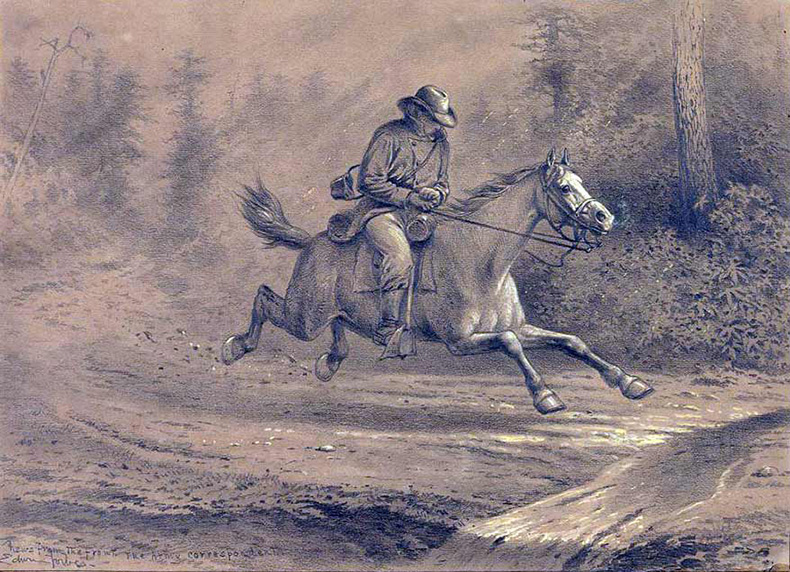
An anecdote by noted artist Edwin Forbes kicks off the
page. It ties into this theme of “the dangers of riding through
country infested with enemy guerillas.”
These are all fun reads, full of adventure.
The page closes on a subject of a more serious
nature. It explores the correspondence of soldier James Ross’s
family members as they anxiously await news of James following reports
of the battle. It took several weeks of uncertainty and anguish before
anything could be learned. Its a good representation of the
emotions experienced by thousands of families during the war.
Corporal George Henry Hill’s epic memoir, Reminiscences
From The Sands Of Time, also from the 13th Regiment Circulars, will
follow on a page of its own.
PICTURE CREDITS: All Images are from
the LIBRARY OF CONGRESS DIGITAL COLLECTIONS with the following
exceptions: Morris Schaff's portrait as a young Military
Academy Cadette is from Wikimedia Commons; Portraits of
John S. Mosby & Edwin M. Stanton are from Battles &
Leaders of the Civil War, The Century Company, 1888; Edwin
Forbes engravings “Attacked by Bushwhackers” & “Writing It Up” are
from his
book, “Thirty Years After, An
Artist’s Memoir of the Civil War” Louisiana State University Press,
1993; The watercolor sketch of Kelly's Mill by Robert Knox
Sneden, is from the collection of his works titled, “Eye of the Storm,”
Edited by Charles F. Bryan, Jr. and Nelson D. Lankford, The Free Press,
New York, 2000; Illustration of Cavalry Bummers, used
in Henry Wing's article, & Portrait of reporter Charles Carleton
Coffin, taken from the respective books, “Four Years of Fighting,
a volume of personal observation with the army & navy” 1866; and
his biography, Charles Carleton Coffin, A Biography by W. E. Griffis,
D.D., Estes & Lauriat, Boston, 1898; both accessed digitally at the
Internet Archive; Illustration of Lincoln at the Telegraph Office, from
the book, Lincoln in the Telegraph Office, by David Homer Bates, 1907,
accessed digitally at the Internet Archive; Screengrab of Buster
Keaton on the railroad tracks, from his 1926 movie, “The
General,' accessed digitally on
the Internet Archive; The photograph of the smiling President Lincoln
impersonator was taken by photographer Buddy Secor found at his flickr
site, https://www.flickr.com/photos/ninja_pix/; The Frank Beard
illustration of the woman bidding goodbye to her son, and the grieving
woman vignette, are from, “The Blue and the Gray, or the
Civil War as seen by a boy,” by Frank Beard & Annie Randall
White, K.
T. Boland Publisher, 1898, accessed at the internet archive. The
photograph of James Ross is from the digital book of his letters
titled, “Willing to Run the Risks;
Letters from
the Civil War, Private James Ross, 9th N.Y.S.M., Co. G, August 1863 ––
May 1864.” Photograph of Confederate Re-enactors by
the author,
Bradley M.
Forbush. ALL IMAGES HAVE BEEN
EDITED IN PHOTOSHOP.
Return to Table of Contents
Carrying
Despatches: Morris Schaff
The Danger of
Being Captured by Guerilla's
in the Rear of the Army's Lines
This humorous short story form Artist
Correspondent Edwin Forbes' memoirs, "Thirty Years After", describes
the constant danger of being swooped down
upon by Confederate Partisan Rangers in the rear of Union Army
lines. It is posted as a prelude to the stories following it,
regarding efforts to carry messages from the Wilderness battlefield to
the press. From "Ten Years After, An Artist's
Memoir of the Civil War." (p. 133.)
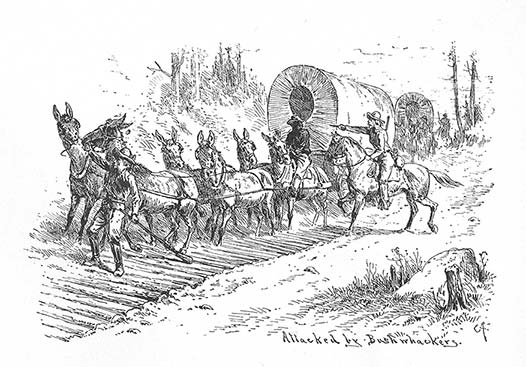
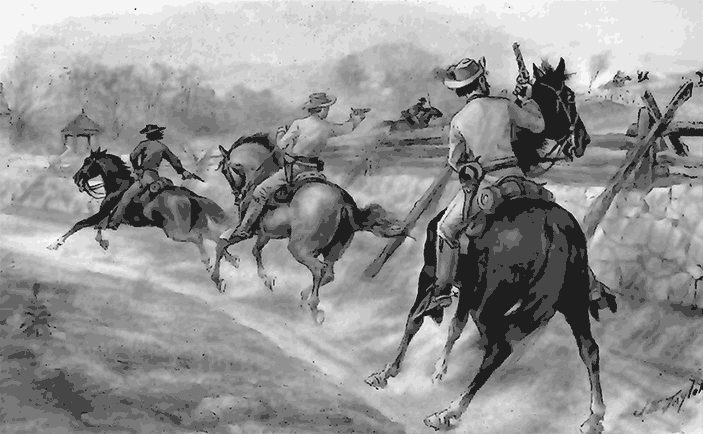
NEWSPAPERS IN CAMP
I was once making effort to reach the front in
anticipation of a great battle, and had to ride forty miles.
While pushing along, keeping a lookout for bushwhackers, I heard the
sound of galloping horses in my rear. On looking around I saw two
mounted boys, riding along with a “dare-devil” air. On coming up
to me the larger boy cried out, “Say Mister, can we ride with
you? We’re afraid of being picked up.”
I laughed at the idea of the slight protection that I
could offer, but cheerfully accepted their company in my own
loneliness, and soon learned that they were on the way to camp to sell
newspapers. We rode along without any exciting
adventure, except
the sight of two or three of the enemy’s scouts, who were
evidently watching the road with the expectation of capturing a wagon
train. We moved on until within ten miles of camp, when the boys
became impatient, and said they must hurry on to reach camp before
dark. So, bidding me good-bye, they hurried off on a lively
gallop, and were soon out of sight. I quickened my horse’s speed
soon after, and at the end of four miles came in sight of a pontoon
train, guarded by infantry, also on its way to camp. I was glad
of the
protection of the pontoon guard, and rode with them until safe within
the Union lines.
The boys passed out of my mind; and I should
probably
never have recalled the incident, but one day the next winter as I was
riding through camp, a little fellow on horseback hailed me and said,
“How d’ye do? Don’t you know me?” I told hm that I did not,
and he said; “Why, I’m one of the newsboys that rode with you
last summer on your way to the army; and I just want to tell you what
happened to us. You remember when we left you and hurried
ahead? Well, after riding a little way, we came up to a pontoon
train and rode with it awhile, but soon left it and rode ahead with a
sutler, who was anxious to join his regiment. We pushed along,
but had not ridden more than half a mile when a party of Moseby’s
men jumped out of the woods, and, seizing the sutler’s horses by the
head, hurried us all into a patch of woods near the road. The
Mosebies sat perfectly quiet on their horses, and watched the pontoon
train pass; and I saw you riding near the first wagon.”
I asked about the fate of the sutler, and he
continued: “Just as soon as the train was out of sight, the Rebs
set to work and plundered the wagon of all they could
carry. They took the sutler’s horses and then left. They
did not take our horses, as the Captain said we were poor
boys,
and he wouldn’t put us on the ground.”
“You were fortunate,” I replied.
“Oh, yes,” said the boy; “we didn’t lose
anything.
We helped ourselves to a pair of new boots out of the sutler’s wagon.”
I laughingly bade the fellow good-bye, and as I rode
back to headquarters I thought, “he surely believes that ‘everything’s
fair in love and war.’”
Dispatches of Charles A. Dana, Assistant
Secretary of War.
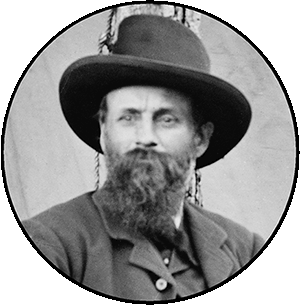
Charles Dana was a talented newspaper
man, who
made a good reputation for himself, at the New York
Tribune. His politics for the
most part agreed with elder Horace Greeley, but their bold
personalities clashed. After a ten year stint, Dana
resigned. Secretary of War, Edwin Stanton hired him to be
"Assistant Secretary of War." When Grant's Spring Campaign began,
and he disappeared into the woods of the Wilderness, President Lincoln
was so anxious for information that Dana was sent to find the army,
stay with it, and keep the Administration informed of its
progress. Here is his first despatch en route. The officer
he
mentions happens to be Lt. Morris Schaff, whose story follows.
Rappahannock,
May 7, 1864––7.15 a.m.
(received 7.50 a.m.)
Just arrived here, all safe. An officer from
General Meade was
here at 2 o’clock this morning seeking to telegraph to Washington, but
was recalled by a second messenger, and both returned to Meade.
They report that there was heavy fighting yesterday in the Wilderness
beyond Germanna Ford. They state regarding the number of wounded,
from 3,000 to 5,000. We drove the rebels 3 miles, but were unable
to use artillery with effect, owing to the density of the forest. The
battle is believed here to have been indecisive, but as the officer
said but little I can gather nothing precise. The first of these
officers said he came to get ammunition brought up from
Alexandria. There is evidently no difficulty in getting to the
front, for which I shall leave as soon as the horses and men have had
breakfast. I leave an operator here to forward reports.
C. A. DANA.
Maj. T. T. Eckert.
Carrying
Despatches from Head-quarters
The following anecdote is from author
Morris Schaff's book, "The Battle of the Wilderness," published, 1910.
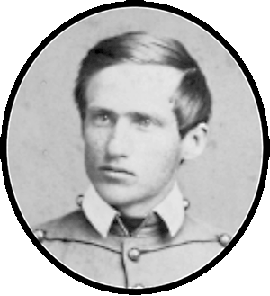
…a mounted orderly came to me from my immediate
commander, the Chief of Ordnance, Captain Edie, to report at Meade’s
headquarters. On reaching there, Edie told me I was to start at
once for Rappahannock Station with despatches to Washington for an
additional supply of infantry ammunition to be sent out with all
haste. The wagons going to meet the train for the ammunition and
other supplies were to be loaded with wounded, who would be transferred
to the cars and thence to the hospitals in Alexandria and Washington.
How the notion got abroad that the supply of ammunition
was exhausted I cannot explain, except by the heavy firing. As a
matter of fact, we had an abundance; but, somehow or other,
Humphreys
or Meade was made to think we were running short and, as early as seven
o’clock, a circular was issued to all corps commanders:––
The question of ammunition is an important one The
Major-General commanding directs that every effort be made to economize
the ammunition, and the ammunition of the killed and wounded be
collected and distributed to the men. Use the bayonet where
possible.
By command of Major-Gen’l Meade,
S. Williams,
Adjutant-General.
Humphreys in a despatch to Warren said, “Spare
ammunition and use the bayonet.”
At nine o’clock, corps commanders were told to empty
one-half of the ammunition-wagons and issue their contents to the
troops without delay, sending the empty wagons to report to Ingalls at
Meade’s headquarters.
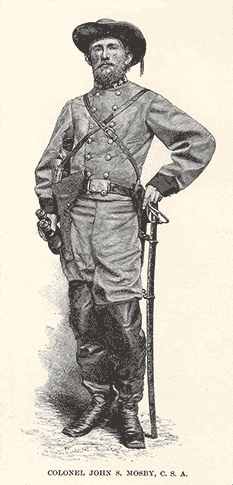
I asked Edie what escort I was to have. He
answered, “A sergeant and four or five men.” I exclaimed, “A
sergeant and four or five men! What would I amount to with that
sort of escort against Mosby?”
For those who have been born since the war, let me say
that Mosby was a very daring officer operating between the Rapidan and
Potomac, his haunt the eastern bae of the Blue Ridge. I think
every staff officer stood in dread of encountering him anywhere outside
the lines, ––at least I know I did, ––from reports of atrocities,
perhaps more or less exaggerated, committed by his men. I must
have worn a most indignant expression, possibly due to just having
escaped capture, for Edie roared with laughter. But I declared
that it was no laughing matter, that I had to have more men than that,
and I got them, for they sent a squadron of the Fifth New York Cavalry,
in command of Lieutenant W. B. Cary, now the Reverend Mr. Cary of
Windsor, Connecticut, and may this day and every day on to the end be a
pleasant one for him! And besides, they supplied me with a fresh
horse, a spirited young black with a narrow white stripe on his nose.
When I was ready to start, I heard General Grant ask
some one near him, “Where is the officer that is going back with
despatches?” Those that I had received were from Meade’s
Adjutant-General. I was taken up to him by some one of his staff,
possibly Porter or Babcock. Grant at once sat down with his back
against a small pine tree, and wrote a despatch directed to Halleck.
While he was writing, E. B. Washburne, a prominent
member of Congress, who, as a fellow townsman of Grant’s, having opened
the door for his career, had come down to see him start the great
campaign (on account of his long-tailed black coat and silk hat the men
said that he was an undertaker that Grant had brought along to bury
“Jeff” Davis), gave me a letter with a Congressman’s frank, to be
mailed to his family. A number of the staff gave me letters
also A telegraph operator was directed to go with me, and my
final instructions were that, if I found communication broken at
Rappahannock, I was to go to Manassas, or the nearest station where the
operator could find an open circuit.
I set out with my despatches, several correspondents
joining me, and I remember that I was not half as polite to them as I
should have been; but in those days a regular army officer who
courted
a newspaper man lost caste with his fellows. Soon after crossing
the Rapidan we met a battalion of a New Jersey cavalry regiment that
had been scouting up the river. It was a newly organized
regiment, one of Burnside’s, and on account of its gaudy uniforms
was called by all the old cavalrymen “Butterflies,” and most
un-mercifully jibed by them. But the “Butterfly” soon rose to the
occasion, and paid the old veterans in coin as good as their own.
As we were riding by them, one of our men inquired if they had seen
anything of Mosby, and, on being answered in the negative, observed
sarcastically in the hearing of the “Butterfly,” “it’s mighty lucky for
Mosby,” and rode on with the grin of a Cheshire cat.
We followed the road to Sheppard’s Grove and then across
country to Stone’s or Paoli Mills on Mountain Run. From there we
made our way to Providence Church on the Norman’s Ford Road, passing
over a part of the field where the lamented Pelham was killed.
The old church, with some of its windows broken, stood on a ridge;
desolated fields lay around it. When we reached it the sun had
set, and I remember how red was its outspread fan in the low western
sky. Rappahannock Station was in sight, and over the works which
occupied the knolls on the north side of the river, which the Sixth
Corps had carried one night by assault after twilight had fallen, the
preceding autumn, to my surprise a flag was flying. I had supposed that
the post had been abandoned, but for some reason or other Burnside had
left a regiment there. Our approach being observed, the pickets
were doubled, for they took us for some of the enemy’s cavalry.
Rappahannock Station, on the north side
of the river.
I went at once, after seeing the officer in command, to
the little one-story rough-boarded house that had served as the
railroad station; and, while the operator was attaching his instrument,
which he carried strapped to his saddle, I opened Grant’s despatch and
read it. In view of its being his first from the Wilderness, I
will give it entire:––
Wilderness
Tavern,
May 6, 1864
––11.30 a.m.
Major-General Halleck,
Washington,
D.C.
We have been engaged with the enemy in full force since
early
yesterday. So far there is no decisive result, but I think all things
are progressing favorably. Our loss to this time I do not think
exceeds 8000, of whom a large proportion are slightly wounded.
Brigadier-General Hays was killed yesterday, and Generals Getty and
Bartlett wounded. We have taken about 1400 prisoners.
Longstreet’s, A. P. Hill’s, and Ewell’s corps are all represented among
the prisoners taken.
U. S. Grant,
Lieutenant-General.
Meanwhile the operator’s instrument had clicked and
clicked, but could get no answer, and he decided we should have to go
on possibly as far as Fairfax Station. 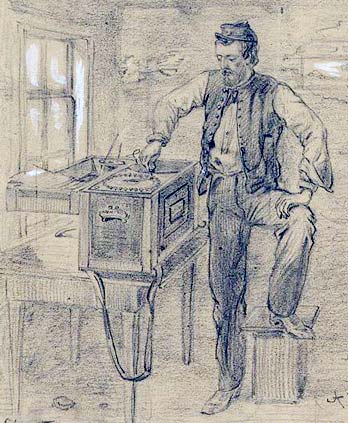 Thereupon I talked
with the commander of the escort, who thought the march should not be
resumed till the horses had fed and had a good rest, as it was at least
thirty miles to Fairfax Station. We agreed to start not
later than half-past ten. Thereupon I talked
with the commander of the escort, who thought the march should not be
resumed till the horses had fed and had a good rest, as it was at least
thirty miles to Fairfax Station. We agreed to start not
later than half-past ten.
The colonel gave us some supper and wanted to know all
about the battle; but I was very tired, and in those days with
strangers very reserved, so I am afraid I disappointed him, and
soon went to sleep. My reticence is reflected in the following
despatch from C. A. Dana, Assistant Secretary of War whom Lincoln had
asked to go to Grant and tell how the day was going; for that
merciful
man could not stand the strain of uncertainty any longer. Dana
arrived at seven o’clock the following morning, and reported:
“An officer from General Meade was here at 2 o’clock
this morning seeking to telegraph to Washington, but was recalled by a
second messenger. They report heavy fighting, etc…. The battle is
believed to have been indecisive, but as the officer said but little, I
can gather nothing precise.”
Well, why should I have particularized or boasted?
The fact is I
had seen nothing like a victory. Naturally prone to take a dark
view and equally anxious to avoid conveying half-developed information,
I do not believe that the colonel could have pumped with any chance of
success in getting either favorable news or full details.
Saddling had begun when I was waked up by the officer of
the guard, who
said that a civilian had just been brought in from the picket-line,
claiming to be a scout from Grant’s headquarters with orders from
him to me. I did not recognize the man, though I may have seen
him about the provost-marshal’s head-quarters. He handed me a
small envelope containing the following order: ––
Headquarters,
Army of the Potomac,
May
6, 1864 ––8 p.m.
Lieut. Morris Schaff,
Ordnance Officer.
The commanding general directs that you return with your
party and
despatches to these headquarters, the orders directing the procuring of
an additional supply of ammunition having been recalled.
I am, very respectfully, your obedient servant,
S. Williams,
Assistant-Adjutant-General
The original in the same little envelope is lying before
me now; it is beginning to wear an old look and is turning
yellow. You, envelope, and your associations are dear to me, and
as my eye falls on you, old days come back and I see the Army of the
Potomac again. In a little while we shall part; and I wonder if
in years to come you will dream of that night when we first met on the
Rappahannock, hear the low intermittent swish of the water among the
willows on the fringed banks as then, and go back under the dim
starlight to the Wilderness, with a light-haired boy mounted on a young
black horse that had a little white snip on its nose.
Return to Top of Page
Henry Wing, “When Lincoln Kissed Me”
The following article was printed in the
13th Regiment Association Circular #29; November 25, 1916.
Because it was of interest to the veterans of the regiment, I copy it
here. It ties in nicely with the above essays.
In the foreword to this “Bit of History,” the
writer thereof says:
“At the time of the events narrated, Mr. Wing was
correspondent for “The New York Tribune,” assigned to the Army of the
Potomac. To his intimate friends he has long been known as a
raconteur of unusual ability, with experiences in varied fields well
worthy of permanent record. His modesty, however, is as
characteristic
as his story-telling. It will be evident to all who read this
thrilling narrative, that he sacrificed an opportunity for literary
distinction in order that he might become a Methodist preacher.”
WHEN LINCOLN KISSED ME.
A Story of the Wilderness Campaign.
By Rev. Henry E. Wing.
(By courtesy of the Author.)
In the original column, the author
mis-spelled, Meade, & Culpeper. I have corrected the
spelling.––B.F.
On May 4, 1864, a great army of citizen soldiers,
comprising representatives of hundreds of thousands of families from
every Northern community, had vanished without warning, leaving
absolutely no sign of their destination, or hint even of the direction
in which they had disappeared.
There followed three or four days of such heart-breaking
apprehension and bewilderment as the loyal nation had never before
experienced.
I did not then comprehend, and probably cannot yet quite
appreciate, the tension of painful anxiety that held the whole country
in its grip and which it became my good fortune later to relieve.
It may be noted that this slipping away of the army from
all communication with the Capital was intentional and
deliberate. A study of previous “advances,” under the
surveillance of parties in authority inexperienced in military affairs,
will disclose one motive for bringing Grant east to take personal
charge of this campaign. This will also furnish the key to the
letter from the President to him, written a short week before the
movement was made, in which he says:
“The particulars of your plans I neither know nor seek
to know.”
The great campaign “by the left flank” that was to end
at Appomattox nearly a year afterward, was begun from about Culpeper on
the early morning of May 4, 1864. “The objective point,” Grant
had written to Meade, “will be Lee’s army. Where he goes there
you will go also.”
Lee’s army was at and about Orange Court House, between
Culpeper and his first “objective point” ––moving by the left, to
possibly get between Lee and his capital––flowed the Rapidan River, and
beyond that stretched the almost impenetrable “wilderness.”
The immediate undertaking was to get the Union army of
more than one hundred thousand men over into the open country before
Lee could intercept it.
This was no small task. There were actually but two
miserable and narrow roads; one across Germania Ford and by Old
Wilderness Tavern, toward Spotsylvania, the other across Ely’s Ford,
and, skirting the Wilderness to Chancellorsville. Over these two
highways, for an average distance of twenty-five miles, before Lee
could fall upon them, were to be pushed something like thirty miles of
marching infantry, ten miles of cavalry, five miles of artillery and
sixty miles of army wagons. It is evident that the key to the
success of this initial movement was push.
The Second Corps (Hancock’s), escorted by Gregg’s
division of cavalry, crossed at Ely’s Ford in the early morning (May
4) and reached the open country, near Chancellorsville, about
noon. Here, in a splendid position for a great battle,
Hancock spent the afternoon intrenching and extending his lines
westward to certainly get between Lee and Richmond. Meanwhile
Warren, with his fifth corps, crossed at Germania Ford and worked his
way down by the Tavern till he reached the junction of the Orange Court
House Turnpike. Instead of pushing right on and joining Hancock,
he halted here and got into position for a possible attack by Lee,
leaving Sedgwick with his sixth corps “bottled up”in the narrow road
two or three miles behind him, and Hancock cut off from all support,
five or six miles in front. Here, on Thursday morning May 5, Lee
found us; and here ensued the dreadful Battle of the Wilderness.
“The New York Tribune” had four correspondents in the
field, of whom I was one, attached at that time to the second
corps. At the close of the first day’s fighting, we came together
at army headquarters to compare notes and to lay plans for the
future. The battle was to be renewed the next morning. It
was an open secret that Meade had suggested a retreat across the river
under cover of the night and a fresh start over some more promising
route, and that Grant had vetoed the proposition and had ordered the
lines to be formed for an assault upon the enemy at daybreak. [This
was an untrue rumor regarding Gen. Meade––B.F.]
It was very quickly decided that one of us should start
for the north with the several reports of the stirring events of the
last two or three days. As I was the youngest, I knew the task
naturally belonged to me, and my offer to undertake it was instantly
accepted by the others. It was known to be an adventurous
undertaking. The Ninth Corps was already crossing the Rapidan to
support the fortunes of the battle-line in front, and thus by to-morrow
the whole country between the Rapidan and the Bull Run Rivers was to be
abandoned by our troops. How full of peril the enterprise really
was
may be inferred from the fact that of four or five messengers for
different newspapers I was the only one who had the good fortune to get
through.
My favorite mount was a Kentucky-bred racing horse that
I had procured from Captain Cline, Meade’s chief of scouts.
As soon as it was decided that I should make the trip I
went up to the corral and instructed the “boy” to give Jesse a hearty
breakfast at three o’clock in the morning, and to have him groomed and
saddled at four. He might have to take me more than seventy miles
to Washington ––possibly without even a feed or halt ––the following
day.
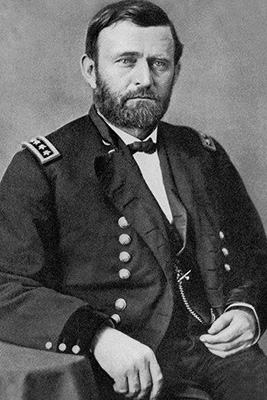
I then went up to Grant’s headquarters, and approaching
him, said that I was going out the next day and asked him if he had any
message to the people that I could insert in my dispatches to the
Tribune.
“Well, yes,” he replied, “you may tell the people that
things are going swimmingly down here.”
The remark was so evasive, or purposely misleading, at
the close of a battle in which every one of his plans had evidently
gone wrong that I smiled as I entered the exact words in my note book,
thanked him, and turned away. I had only taken a step or
two when he got up and joined me. When we had walked out of hearing of
his companions he laid his hand upon my shoulder and, quietly facing
me, inquired “You expect to get through to Washington?” I replied
that that was my purpose and that I should start at daybreak.
Then, in a low tone, he said: “Well, if you see
the President, tell him from me that, whatever happens, there will be
no turning back.” He silently gave me his hand in farewell
greeting, and we parted….
I had worked out a splendid plan ––for getting
captured. On Wednesday morning, riding with the second
corps, my
journalistic companion was Mr. Waud, of “Harper’s Weekly.” After
crossing at Ely’s Ford he took me up the river a few miles to some
silver mines. Here was an acquaintance of his, a Mr. Wykoff of
Brooklyn, New York, who, too far advanced in life to be drafted into
the Confederate service, had stayed to look after mining properties
owned by Northern capitalists.
My scheme was now to get Mr. Wykoff to go along with me,
at least across the country to the Rappahannock River, guiding me by
by-roads and cattle-trails with which he must be familiar, through that
portion of my route, in the immediate rear of our army, and most likely
to be overrun by bands of guerrillas and scouting parties of the
enemy’s cavalry, so I turned Jesse’s head toward Culpeper mines, and
in a short time was at Mr. Wykoff’s door.
Mr. Wykoff dismissed my proposal without the slightest
hesitation, but when he realized that I was determined to try he
elaborated the scheme to which I was to owe my success at last.
So this was my story: There had been a
great battle in which the Yankee army had been overwhelmingly defeated;
and I was hurrying along with the good news to our friends in
Washington.
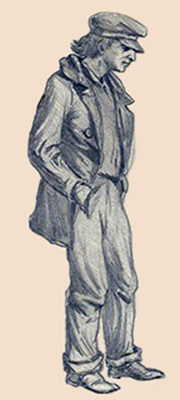
To fortify me in the prosecution of this adventure Mr.
Wykoff made me familiar with the names of half a dozen prominent
Southern sympathizers in the Capital City. Then he wisely
determined that I was too well dressed for the part. The Tribune
took pride in having representatives well equipped, and my outfit
included pantaloons of the most costly Irish corduroy, a fine
”buckskin” jacket, a dark, soft felt hat, calf-skin boots and Alexandra
kid gloves. These I exchanged for a regular “Butternut” suit,
with coarse, broad “brogans” and a disreputable hat of quilted cotton.
While these preparations were being made, a troop of
gray cavalry passed up the river on the opposite bank, and it
became nearly certain that I was to fall in with many such parties.
No loyal man would take through our lines, where there
was possibility of capture, a scrap of paper that would convey
information to the enemy; so I destroyed my precious budget of
correspondence and all notes and memoranda that could possibly disclose
information of value, for my own safety I divested myself of all
private papers by which I could be identified. Then, bidding
farewell to the loyal man to whose wise counsel I undoubtedly owe my
life, I set out on my long and hazardous journey.
About eight miles on the way was the little hamlet of
Richardsville, at which point Mr. Wykoff had advised me to take a
blind trail across to Field’s Ford on the Rappahannock. I reached
there, having encountered but one small squad of Confederate scouts,
with whom
I had no difficulty. I was much encouraged by my experience thus
far; and once across the Rappahannock, the country I was to travel was
likely to be practically abandoned. But right now, I came to a troop of
Mosby’s troopers. They were lying about in a dooryard, with their
horses feeding outside the fence. As I was riding leisurely by,
they naturally hailed me, and, gathering about, received my good
tidings
of Lee’s victory with great rejoicing. But, as to my going on
alone ! the woods were full of skulking “nigger” soldiers
––stragglers from Ferraro’s division of colored troops, and the life of
a good rebel, like me, would not be worth “ a chaw-er-terbacker.”
The sequel was that they furnished me an escort of two men to protect
me on the way. I was now having the “run of luck” which had been
rather a distinguishing feature of my career since boyhood. Two
men, mounted and armed, ragged and dirty enough to be my fit
companions, were to give me respectable standing with their neighbors,
and were to defend me from the ravaging black man.
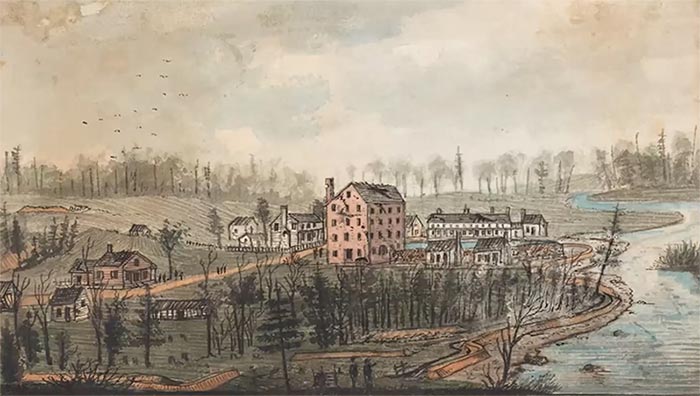
Robert Knox Sneden sketch of Kellysville
on the Rappahannock river.
I supposed that we were on our way to Field’s Ford, but,
coming over the brow of a hill, I recognized the scene before me.
We were at Kelly’s Ford, and Mr. Kelly, a one-armed man ––at heart a
bitter secessionist ––had “entertained” me for two days while our
troops were in that neighborhood. He would almost certainly
recognize me in even this disguise unless I could slip by
unobserved. So I dismissed my kind companions with many thanks,
as I was now sure of myself, and they had been in the saddle all night.
Once rid of my escort, I started for the ford, but Mr.
Kelly was standing on a knoll above his house, listening to the roar of
the distant battle, and hastening across to the road, he intercepted
me. I drew my slouching hat brim down over my face, but he
recognized me, and reached for the bridle. As he did so, I
touched Jesse with the spur, and he sprang forward and rushed for the
river. In answer to Mr. Kelly’s shouts, my erstwhile comrades,
joined by two other mounted men, came dashing after me. In my
confusion we missed the ford, but Jesse swam boldly through the deep
waters to the upper shore. As he scrambled up the steep bank, a
volley of scattering shots spattered about us.
I was now in excellent spirits, I was mounted on a horse
that had never been overtaken. Besides, my proverbial “luck”
could certainly be depended on.
But just then I made one of these sad mistakes that so
frequently interrupt and defeat the good offices of Dame Fortune.
I should have kept right on east through a sparsely settled country to
Warrenton Junction; but a piece of thick timber at the left hand
invited me to turn aside into a wood path, and in ten minutes I burst
into the clearing about Rappahannock Station, on the Orange and
Alexandria Railroad. Here were five hundred people, of all ages,
and both sexes, loading carts and wagons with abandoned army
supplies. I could not ride through the crowd on a gallop without
attracting attention, so I pulled Jesse down to a walk and no one
accosted me.
I turned to the right and, once past the village, tried
to put Jesse forward at his best gait toward Washington, but the road
was so encumbered with vehicles and cavalrymen that I could make but
slow progress ….
While my story was finally accepted by everyone I met,
my progress was constantly interrupted, and somewhere behind me were my
comrades of the morning, gathering recruits as they came, and bent on
my capture.
With a clear road, on a horse that had never been
outstripped, I would have enjoyed the contest, but every moment in
which I was halted and questioned increased my peril until I was
certain that I could never get through in the saddle. My
only chance was in abandoning my horse. But leaving him in the
highway would result in my certain capture before I could get out of
the neighborhood.
Just then my apparently ever-present good fortune again
came to my aid. A clump of trees with thick underbrush a few
yards from the road offered “shelter for man and beast.” Watching
my opportunity, when no one was in sight, I led Jesse into this safe
retreat. Slipping off saddle and bridle and hiding them away, I
tied my good friend a long rein to an overhanging branch, poured the
oats upon the ground, and bade him a really “affectionate farewell.”
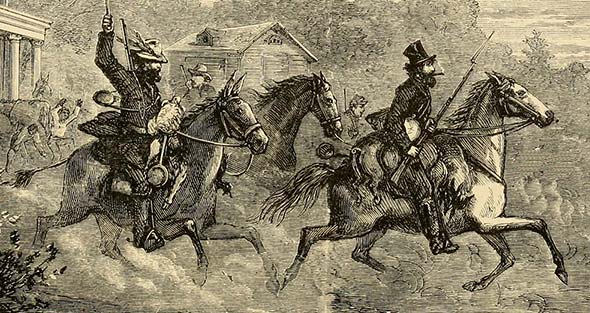
Before I crept out of my hiding place a dozen men, led
by my quondam friends, came galloping by. They were evidently in
quest of a good-looking youngster, in a butternut suit, riding a
handsome chestnut Kentucky thoroughbred. If they are looking yet
this way inform them that we are not thereabouts. Even Jesse is
not there for, in fulfillment of a sacred promise to him, I
sneaked back the next Sunday and brought him out.
The hiding away of that horse was fortunate for me, for
it evidently put my pursuers completely off the scent. I crawled
over to the railroad and started on my long tramp up the track for our
lines about Washington.
I frequently lay for several minutes flat
in the weeds and grass, cruelly tormented by swarms of insects, while
parties passed within sight. It took me over an hour to get
around Warrenton Junction, where, as at Rappahannock Station, scores of
people were gathering and packing off the debris of the deserted Union
camps.
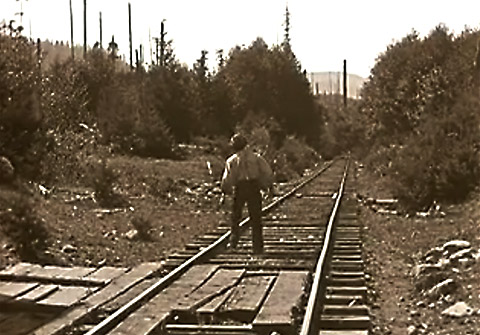 Then came a great surprise.
Hastening through a
cut and around a curve in the road, I encountered an armed man.
My first impression was that he was one of Mosby’s guerrillas,
disguised, as they frequently were, in the uniform of the patriot
troops; but his voice, as he ordered me to halt, gave me
assurance, for in all my intercourse with Confederates, I had never
heard the Irish brogue from the lips of a disloyal person. He
proved to
be a private of one of our Irish regiments (I think the Sixty-ninth New
York). They had been here all winter, I believe, as guard of the
bridge across Cedar Creek, and, by some mistake, had received no orders
to break camp and join in the general advance. Being an infantry
regiment, they had no large guns, but they had mounted their
breastworks with “Quaker” cannon ––logs, with the ends blackened with
charcoal. These looked very formidable to the gray cavalrymen circling
about at a safe distance, but, on close examination, as a sergeant
remarked, “They were almost too natural to be real.” I got a good
diner here and lots of good cheer. As there were several parties
in sight, and I was to resume the role of Southern sympathizer, I
arranged with these people to fire a volley toward me as I “escaped”
across the bridge… Then came a great surprise.
Hastening through a
cut and around a curve in the road, I encountered an armed man.
My first impression was that he was one of Mosby’s guerrillas,
disguised, as they frequently were, in the uniform of the patriot
troops; but his voice, as he ordered me to halt, gave me
assurance, for in all my intercourse with Confederates, I had never
heard the Irish brogue from the lips of a disloyal person. He
proved to
be a private of one of our Irish regiments (I think the Sixty-ninth New
York). They had been here all winter, I believe, as guard of the
bridge across Cedar Creek, and, by some mistake, had received no orders
to break camp and join in the general advance. Being an infantry
regiment, they had no large guns, but they had mounted their
breastworks with “Quaker” cannon ––logs, with the ends blackened with
charcoal. These looked very formidable to the gray cavalrymen circling
about at a safe distance, but, on close examination, as a sergeant
remarked, “They were almost too natural to be real.” I got a good
diner here and lots of good cheer. As there were several parties
in sight, and I was to resume the role of Southern sympathizer, I
arranged with these people to fire a volley toward me as I “escaped”
across the bridge…
At Manassas Junction I got caught at last. Here
was a regularly organized Confederate cavalry camp ––really an outpost
to protect all the country from the Bull Run to the Rapidan, recently
abandoned by our troops, from incursion by the forces about the Capital.
As I approached the place, so much vigilance was
manifest that I abandoned the idea of creeping past, deeming it safer
to walk boldly into the camp. I told my story, with the purpose
of pressing right forward on my mission, but the major in command was
absent and the lieutenant in temporary charge did not feel justified in
letting me go on.
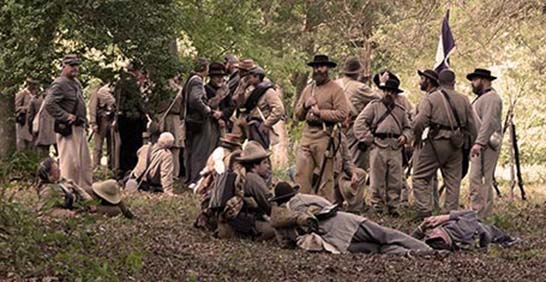
Here I waited three or four hours, getting more
impatient as the time went by, and more uneasy lest some one might come
in from below with a description of a certain fugitive in whom I had a
vital interest. At last dusk came on, and then I did a very
ungentlemanly thing. Without any expression of thanks to
these extremely attentive people, or any polite message for the gallant
major at whose headquarters I had been entertained with such steadfast
and scrupulous solicitude, I crawled out between the guards and broke
away up the track for the Bull Run River, six miles distant.
Reaching there, as I came across the trestle, a Union
picket took me in and sent me to the post headquarters at Union Mills,
nearby.
The officer in command, a kind well-bred Frenchman,
remembered me as having visited the post from Washington a few weeks
previous, and here, at last, safe within our lines, my story of
adventures might end; except that here, at last also,
difficulties less exciting but if possible, more formidable, and
certainly much more annoying were awaiting me.
I found that I was the first newspaper man ––indeed, the
only man from the front––to cross Bull Run River. This made my
news doubly valuable. The nearest public telegraph station was at
Alexandria, twenty miles away. That office would close at
midnight. To accomplish my “beat” of all the other papers I must
make that twenty miles in three hours. At that time “A horse! a
horse!” was my mental exclamation if not an actual one, and I offered
all sorts of sums up to a thousand dollars for a horse and guide
to Alexandria. Five hundred dollars was my offer for a handcar
and a lusty man to help me run it, “but the car belonged to the
Government.” That statement gave me an idea; the
Government had a telegraph wire out there, with an operator. I
would not confess what this “idea” was except to make this narrative
complete, and furthermore, to illustrate that spirit of emulation in a
reporter which may tempt him sometimes to adopt desperate measures in
the interest of his paper.
I knew that no messages except those
strictly on Government business and under military control were ever
permitted over one of these wires. Nevertheless, I was bent on
“subsidizing” that operator, at whatever cost, to send out a few words
to the Tribune Bureau at Washington. But before I reached the
telegraph office this scheme was abandoned as impracticable …
Even as I discarded this plan another suggested
itself. The Hon. Charles A. Dana was a personal friend of mine
and was Assistant Secretary of War. If I could get him on the
wire, something might possibly be done; so I wrote a dispatch, as a
“feeler,” directed to him, officially, as follows: “I am just
from the front. Left Grant at four o’clock this morning.”
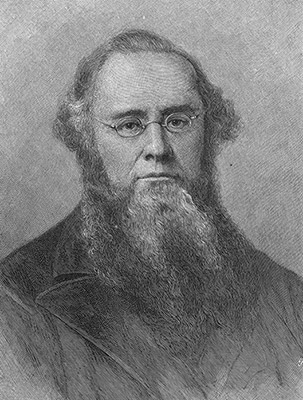
A response came immediately, but from Secretary
Stanton:
“Where did you leave Grant?”
What! Even the Government had no knowledge of
events at the front? I had stored away under that faded cloth hat
all the information there was of the momentous movements across the
Rapidan. But I would be modest and generous: if Mr. Stanton
would let me send one hundred words over the line I would tell him all
that I knew. On a repetition of the demand, in more
peremptory terms, I replied that my news belonged to “The New
York Tribune,” and that he would have to negotiate with them for its
release. But I renewed my offer.
Five minutes afterward, at a call from the operator, the
post commander came in. He looked at a telegram handed him, and
he then informed me that Mr. Stanton had ordered my arrest as a spy
unless I would uncover my news from the front. Of course that
settled it. I would not have told him one little word to save my
life; but here I was at the end of my resources. It had
been my purpose, if he finally refused my offer, to start afoot for
Alexandria in a frantic effort to make the twenty miles by midnight,
but now there was nothing to be done but to submit. This news,
that the whole country was lying awake for, was tied up here with a
strip of dirty red tape. And the young man who to get it here had
been shot at, and chased and captured; who had masqueraded as a
loathsome “Copperhead,” who had told two hundred lies, and who had even
seriously contemplated committing a felony, was to be locked up in a
mouldy, rat-infested guard-house!
Hardly that. On giving my parole not to run away I
could have the freedom of the camp.
I lay down on a bench in the little station, hungry,
tired, disgusted and for the first time, utterly discouraged.
Then something occurred that I cannot explain. I knew
nothing of the telegraph code, yet, as a message was being ticked off
on the tape, some subtle current of influence touched my
apprehension. I knew that it was for me. I sprang to my
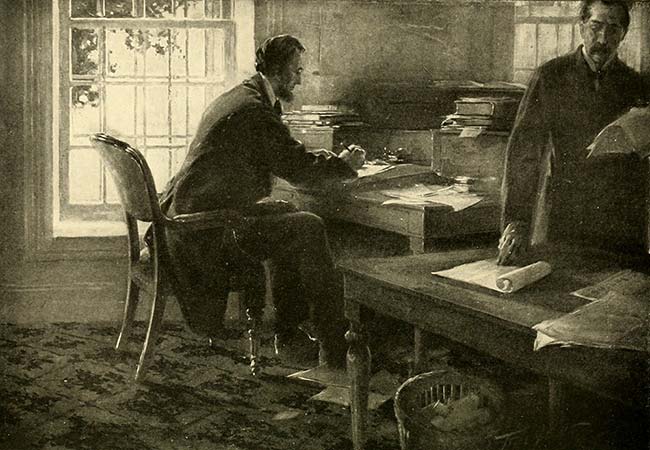
feet, “What is it?” was my question. “Mr. Lincoln wants to know
if you will tell him where Grant is.”
President Lincoln at the Telegraph
Office. Illustration by Charles M. Relyea.
I repeated my offer––to communicate whatever information
I had, for the use of the wire to transmit one hundred words. He
accepted my terms without hesitation, only suggesting that my statement
to my paper be so full as to disclose to the public the general
situation.
Nothing now was the matter with me. I was neither
tired, hungry, nor sleepy. Standing by the operator at Union
Mills, I dictated the half-column dispatch which appeared in the
Tribune on the morning of Saturday, May 7, 1864.
Mr. Lincoln, with his characteristic thoughtfulness for
the public interests, arranged for the transfer to the Associated Press
of a short summary of the news, and thus the anxiety of the whole
country was set at ease.
A locomotive was sent down for me and about two o’clock
in the morning I reached the White House, where the President had
gathered his official family to meet me. As I stepped into the
room where they were seated my glance caught a quick gleam of surprise
and apprehension in Mr. Lincoln’s eyes, and I was awakened to a sense
of my disreputable appearance. My hair was disheveled, my shabby
old coat was dusty and wrinkled, my pantaloons, much too long, were
folded back at the bottom and gathered about my ankles with pieces of
cotton twine, and my coarse shoes were coated three or four layers
thick with “sacred soil.”
I had met, perhaps, every one of this company at pubic
functions or in private interview, but not one of them recognized me in
this garb. As my glance swept around the group it rested on the
genial countenance of a particular friend, Mr. Welles, of Hartford,
Connecticut, the Honorable Secretary of the Navy. As I advanced
and accosted him he identified me by my voice. He then presented me,
with much embarrassing formality, to the others.
A half-hour or more was spent in description of the
movements of the troops, and in explanation, from a large map on the
wall, of the situation at the time when I left. Then,
as the company
was dispersing,
I turned to Mr. Lincoln and said: “Mr. President, I have a
personal word for you.”
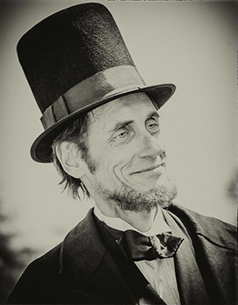
The others withdrew, and he closed the
door and advanced toward me. As he stood there I realized as
never before how tall he was. I looked up into his impassive
face, ready to deliver Grant’s message. He took a short, quick,
step toward me, and, stooping to bring his eyes level with mine,
whispered, in tones of intense, impatient interest, “What is it?”
I was so moved that I could hardly stammer; “General Grant told
me to tell you, from him, that whatever happens, there is to be no
turning back.”
The vision that opened through those wonderful eyes from
a great soul, glowing with a newly kindled hope, is the likeness of Mr.
Lincoln that I still hold in my memory, and ever shall, and that hope
was never to be extinguished. Others had “turned back.”
Every other one had, but there had come an end of that fatal folly.
Mr. Lincoln put his great, strong, arms about me, and,
carried away in the exuberance of his gladness, imprinted a kiss on my
forehead.
We sat down again, and I then disclosed to him, as I
could not do except in the light of that pledge of the great commander,
all the disheartening details of that dreadful day in the
wilderness. But I could assure him that the Army of the Potomac,
in all its history, was never in such hopeful spirit as when they
discovered, at the close of a day of disappointment, that they were not
to “turn back.”
New York
Tribune, Saturday May 7, 1864
Henry Wing's Report as printed in the
Tribune. The reporting is very good except that at the end a conclusion
was drawn that a grand victory had been won. These kinds of
statements in the reporting led the public into great shock when the
true number of casualties suffered by the Union Army in these battles
finally became known.
New York, Saturday, May 7 1864.
Union Mills,
Va., Friday, May 6––9 p.m.
The grand Army of the Potomac crossed the Rapidan on
Wednesday. The 2d Corps moved on Tuesday to the Mills, opposite
Ely’s Ford. On Wednesday morning, at 4 o’clock, the cavalry
crossed and drove the Rebel pickets from opposite hights, meeting with
no opposition.
A position was gained and the corps moved on at 7
o’clock, taking the road to Chancellorsville, at which place Gen.
Hancock would establish his headquarters.
The 5th and 6th Corps crossed at Germania Ford in the
course of the day, taking the road to the Wilderness.
On Wednesday night Gen. Warren’s headquarters were at
Wilderness, Gen. Sedgwick on his right, and the General Headquarters at
Germania Ford.
On Thursday morning the Rebels pressed our pickets, and
appeared to be in strong force on our right. The 5th New-York
Cavalry, skirmishing on the Orange Court-House Road, near Perkin’s
tavern, were driven in with a severe loss, leaving many wounded on the
field. Gen. Griffith’s division was marched forward on our right
about 11 o’clock to feel the enemy’s position, and were met by the
Rebel Gen. A. P. Hill, supported by Gen. Ewell.
A severe action took place, in which we captured about
300 prisoners though it is reported that we lost two guns.
Meantime, General Hancock marched his corps to the right to connect
with Warren, and had hardly got into position, his left resting on or
near Chancellorsville, when he was attacked by Longstreet with his full
corps, and a part of Ewell’s.
Gen. Hancock, with the assistance of Getty’s Division of
the 6th Corps, held his position under musketed fire of
two-and-a-half-hours duration, in which his command suffered severely,
inflicting much injury upon the Rebels.
Other developments showed Lee to have his whole force in
front.
This knowledge of their position was of course highly
important, and was thus obtained only by the greatest skill
in the handling of our troops. It not being the purpose of Gen.
Meade to advance upon the enemy, he ordered the line of battle to be
held till morning.
The position of our troops on Thursday night was
parallel with and a little in advance of the road from Germania Ford to
Chancellorsville, the two flanks resting on those points, and general
headquarters at the Wilderness.
Meanwhile, in the afternoon the advance of the 9th Corps
crossed Germania Ford, taking position on our right flank.
Gen. Burnside’s rear arrived this forenoon.
It was understood that a general attack was to be made
this morning, and heavy firing had commenced on our right when I left
at 5 o’clock.
Heavy cannonading was head when I passed Kelly’s Ford,
about 9 o’clock this forenoon, which leads me to believe that we had
driven them to their defenses, as no heavy guns could be brought into
action on the former position.
There ought to be no doubt that there has been a grand
victory, as Gen. Meade showed his strength yesterday by a stubborn and
gallant defense without using half the command that he has undoubtedly
brought into the action to-day. The troops are in a high state of
enthusiasm.
I am on my way to Washington with more complete reports,
that I will send tomorrow.
The Latest from the Front.
Special Dispatch to The N. Y. Tribune
Washington, Friday, May 6, 1864.
The latest and only news from toward the front to-day is
that all communication is cut off beyond Union Mills, the railroad
beyond that point having been abandoned, and all Government
property at Culpepper, Brandy Station, and other points brought back to
Alexandria even to the late railroad bridges across the Rappahannock.
The Government has received positive information that
there is not a word of truth in the rumors of large Rebel forces in the
Shenandoah Valley. The forces which for some time past have been
operating in the Valley have rejoined the main army under Lee, even the
guerillas having disappeared, excepting a few under O’Neill and White.
The raid yesterday on the Baltimore and Ohio Railroad
was merely a spasmodic attempt to interrupt communication, and for
purposes of plunder. The communication was interrupted only for a few
hours.
The Reports about the
Army.
Washington,
Friday, May 6, 1864.
There is no trustworthy information from the Army front,
because of the
interruption of the means of communication Rumors, therefore,
take the place of known facts.
Return to Top of Page
Carleton For The Boston Journal
We leave the story of Henry Wing,
the first courier to get his messags through to the public from the
war-front, and take up the story of Charles Carleton Coffin of the
Boston Journal, whose reports of the battle were the second set of
despatches to get through. I particularly
liked the part in the narrative, about what to feed a horse to prep him
for a vigorous
journey. Carleton, as he called himself, was a
prolific author of American History books after the war. His war
memoirs were also published.
The following story is from, “Charles
Carleton
Coffin, War
Correspondent, Traveller, Author and Statesman,” by William
Elliot
Griffis, D.D., Estes & Lauriat, Boston, 1898.
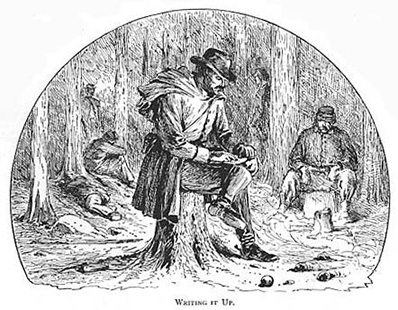
After work with the pen
concerning the great battles in
the Wilderness, Carleton’s great question was how to get his letters to
Boston. The first bundle was carried by Mr. Wing, of the New York
Tribune, the second by Mr. Coffin’s nephew, Edmund Carleton. The
nearest point occupied by the Union army, which had communication with
the North by either boat, mail or telegraph, was Fredericksburg, more
than forty miles to the eastward. To reach this place one must
ride through a region liable at any moment to be crossed by regular
Confederate cavalry, Mosby’s troops, or rebel partisans. There
were here and there outposts of the Union cavalry, but the danger to a
small armed party, and much more to a single civilian rider, was very
great. Nevertheless, young Carleton was given his uncle’s letters, with
the injunction to ride his horse so as not to kill it before reaching
Fredericksburg. “The horse’s life is of no importance, compared
with the relief of our friends’ anxiety; and, if necessary to
secure
your purpose of prompt delivery, let the horse die, but preserve its
life if you can.”
To make success as near to certainty as possible, young
Carlton took counsel with the oldest and wisest cavalry men. He then
concluded to take the advice of one, who told him to give his horse a
pint of corn for breakfast and allow the animal plenty of time to eat
and chew the fodder well. 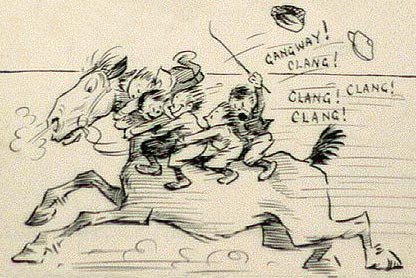 Then,
during the day, let the beast
have all the water he wanted, but no food till he reached his
destination. Fortunately, his horse, being “lean,” was the
one foreordained in the proverb for the “long race.” The young
messenger lay down at night with his despatches within his bosom, his
saddle under his head, and his horse near him. The bridle was
fastened around his person, and all his property so secured that the
only thing that could be stolen from him without his being awakened was
his hat and haversack, –– though this last was under his saddle-pillow.
Nothing else was loose. Then,
during the day, let the beast
have all the water he wanted, but no food till he reached his
destination. Fortunately, his horse, being “lean,” was the
one foreordained in the proverb for the “long race.” The young
messenger lay down at night with his despatches within his bosom, his
saddle under his head, and his horse near him. The bridle was
fastened around his person, and all his property so secured that the
only thing that could be stolen from him without his being awakened was
his hat and haversack, –– though this last was under his saddle-pillow.
Nothing else was loose.
The young man rose early. Alas ! he had been
bereaved indeed. Not only his hat, but his haversack, with all
toilet articles, his uncle’s historic spy-glass, and his personal notes
of the campaign, were gone. While his horse chewed its corn he
found a soldier’s cap, vastly too small, but by ripping up the back
seam he was able to keep it on his head and save himself from
sunstroke. Mounting his horse, he set out eastward at
sunrise.
When some miles beyond the Federal lines, he was
challenged by horsemen whom he found to be of the 13th Pennsylvania
cavalry on outpost duty and just in from a foraging trip. They
hesitated to release him even after examining his passes, but “that
from Butler fetched them.” Even then, they did not like him
to proceed, assuring him, that it was too dangerous for anybody to
cross such unprotected territory. He would be “a dead man inside
of an hour.” However, they examined his horse’s shoes, and gave
him a strip of raw pork, the first food he had tasted for many an
hour. Finally they bade him good-by, promising him that he was
going “immediately to the devil.” Some miles further on, he saw
near him two riders. Mutually suspicious of each other, the
distance was shortened between the two parties until the character of
each was made known. Then it was discovered that all three were
on the
same errand, the solitary horseman for Boston private enterprise, and
the two cavalrymen in blue for General Grant to the Government, were
conveying news.
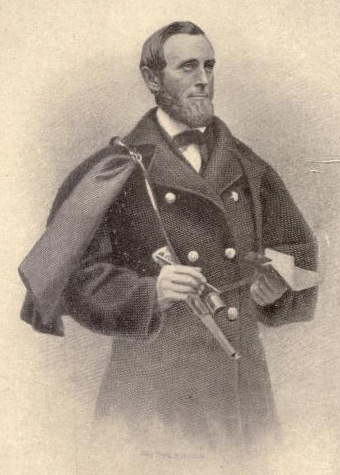
They rode pleasantly together for a few minutes, but
when
Carleton noticed that their horses were fat and too well-fed to go very
fast, he bade his companions good-by. He put spurs to his
horse.
Though it was the hottest day of the year, he reached Fredericksburg
about the middle of the forenoon, thirsty and hungry, having eaten only
the generous cavalryman’s slice of raw pork on the way.
He found there a train loading with the wounded of
several days’ battle. He at once began helping to carry the men
on the cars. Volunteering as a nurse, where nurses were most
needed, though at first refused by the surgeons, he got on board the
train. From the Sanitary Commission officers, he received
the first “square meal” eaten for many days. At Acquia Creek, he
took
the steamboat, and after helping to transfer the wounded from cars to
boat, he remained on board, sleeping on a railing seat. Next
morning he was in Washington, before the newspaper bureaus were open.
He sent by wire a brief account of the Wilderness
battles. At first the operator was very reluctant to transmit the
message, since he was sure that none had been received by the
Government, and he feared reprimand or discharge for sending false
reports. Indeed, this information sent by Carleton was the first
news which either President Lincoln or Secretary Stanton had of Grant’s
latest movements.
From the telegraph office, young Carleton went to the
Boston Journal Bureau, on 14th Street. There he had to
wait
some time, since Mr. Coffin’s successor in Washington, not expecting
any tidings, was leisurely in appearing. By the first mail going
out, however, a “great wad of manuscript,” put in envelopes as
letters,
was posted. Again the Journal beat even the official
messengers and the other newspapers in giving the truthful reports of
an eye-witness. Thus, Charles Carleton Coffin scored another
triumph.
CARLETON'
S REPORT
Carleton's dispatch is included in the
body of reporting taken from this newspaper. It is again, not
surprising to
see the postive slant the reporting holds. This kind of
“everything
is fine” reporting eventually caused great shock to
readers when the truth of the ferocity of these battles, and the real
human cost in lives finally became known.
The Caledonian, St. Johnsbury, Vt., May
13, 1864.
Accessed at the Library of
Congress.
THE CALEDONIAN.
St. Johnsbury, Vt., Friday, May 13, 1864.
THE GREAT BATTLES IN VIRGINIA
––––––––––––––––––––––––––––
Terrible Fighting on Thursday and Friday last. –– The
Rebels Defeated
with Great Loss and Retreating.
The Journal, from the mass of telegraphic reports
compiles the
following account of the advance of Gen. Grant on the rebel army of
Gen. Lee in Virginia, and the battles fought on Thursday and Friday
last:
crossing
the rapidan.
The entire Army of the Potomac effected the crossing of
the Rapidan on
Wednesday, Gen. Gregg’s cavalry division crossing at Ely’s Ford, and
Gen. Wilson’s at Germania Ford, the few mounted pickets of the enemy
scampering away before Gen. Gregg’s cavalry. Double pontoons were
laid, and by 7 o’clock p.m.,
of Wednesday, the whole army
had successfully, and without opposition––not a shot having been
fired–-crossed the Rapidan––Gen. Hancock encamping at the old
Chancellorsville battle ground, Warren at the Wilderness Tavern, and
Gen. Sedgwick at Germania Ford, Generals Grant and Meade’s headquarters
for the night being at the latter ford.
Not a sign of the enemy was found, although our cavalry
pushed beyond
the battle ground at Chancellorsville some distance, except small
squads of cavalry. Some prisoners were captured, among them a
courier from Gen. Rhodes to Ewell, announcing the coming of the
Yankees. Up to this time the whereabouts of the enemy was almost
unknown. Enough was known, however, to warrant the presumption
that he was concentrating and preparing to meet the advancing
hosts. All the movements of our forces were made with the most
perfect precision and care, notwithstanding the hard work of the
march. Burnside at this time was still in reserve. His
command consisted of four divisions numbering in the aggregate, it is
said, 30,000 men, brigaded under Generals Potter, Ferrero, Wilson and
Crittenden, and was expected to come up with the main body of the army
on Thursday afternoon.
the
battle on thursday.
At three o’clock on the morning of Thursday the reveille
was sounded
and our troops sent out on their march to meet the enemy about
daylight––Hancock moving southwest from Chancellorsville, Warren from
the Old Wilderness Tavern to Parker’s store, Sedgwick to follow.
Sheridan with the cavalry was concentrated at Poney Branch Church for a
hunt for Stuart and his horsemen, said to be concentrated and ready for
a move.–– The different bodies moved but a short distance when it was
reported that the enemy were advancing with artillery and infantry from
New Verdiersville. Our infantry column halted in line of battle,
General Segwick on the right, Warren in the center, and Hancock
on the left.
Our troops had not been long in motion when (about six
o’clock) a
report came in from both the turnpike and plank roads, running almost
parallel, that the enemy were advancing. Two hours afterwards the
report was confirmed that strong rebel columns were moving upon us from
the directions mentioned. Generals Grant and Meade came up from
Germania Ford, and orders were issued to halt the various columns of
infantry, and to concentrate and form them for battle at this
point. Commanding ridges running from the northwest to the
southeast across both the roads over which the enemy were advancing,
about half a mile to the west of this point, offered a fine position
for the formation of a battle front, and were selected for this
purpose. Sedgwick was ordered to take the right and Warren
the center, and Hancock was expected to come up on the left.
Warren and Sedgwick got into line about 11 o’clock, and soon after
skirmishing was heard on the front.
About noon General Warren was ordered to push Griffin’s
division
forward to the right and left of the turnpike, and ascertain what the
enemy were about. Bartlett’s brigade moved up to the left and
Ayer’s regulars to the right of the road, Sweetzer’s following in
reserve. After advancing about three-quarters of a mile they
suddenly found themselves confronted by a well-formed, strong rebel
position on a thickly wooded ridge.
A severe battle took place and lasted nearly an hour,
our troops being
opposed by greater numbers, (for the enemy followed his usual custom of
massing almost his whole available force against our men.)
Finally the enemy succeeded in over-lapping Ayres’ brigade and driving
it back. This exposed the flank of Bartlett’s brigade and it was
forced also to fall back for some distance.–– During these
movement two guns belonging to the third Mass. battery had to be left,
in consequence of the killing of nearly all the horses belonging to it,
and fell into the enemy’s hands. The two brigades were soon,
however, relieved by those of Sweetzer and Wadsworth, whom the enemy
attacked with great fury, but were so manfully met that, after an
hour’s severe firing, they withdrew from that part of our line.
[Note; Wadsworth was 4th Division commander
with 3 brigades under his authority. They were positioned to the
left of Bartlett's Brigade when they attacked. Col. Leonard’s
brigade re-enforced Sweetzer along the turnpike, on the right,
behind Ayer's Brigade.—bf.]
Our loss was heavy in Ayers’ and Bartlett’s brigades,
and is estimated
at six hundred in killed, wounded and missing. Among the wounded
were Gen. Bartlett, slightly; Col Hayes, 18th Mass., slightly,
and Co.l
Guiney of the 9th Mass. We took some three hundred prisoners.
About 3 o’clock in the afternoon, Hancock who had been
ordered to the
left not being at hand the enemy attempted to get between Warren and
his corps after retiring from our right. Getty’s division was
immediately ordered up, and Mott’s division of Hancock’s corps arriving
in time they attacked the enemy, giving a chance for the rest of the
corps to form and be ready for them. Hancock’s men behaved most
admirably. This engagement was conducted in a dense wood where no
artillery could be use. Two other divisions, Burton’s and
Gibbon’s, arriving formed a second line, and, notwithstanding the
repeated and heavy attacks of the enemy, held their ground, and this,
too, under the severest musketry fire in the history of the Army of the
Potomac. When the whole corps had arrived, about nightfall, no
advance could be made, darkness preventing the orders of Gen. Grant
from being carried out.
Wadsworth’s division and a brigade of Robinson’s
division, under
command of Gen. Robinson was ordered to take the enemy in front of
Hancock by the right flank, but darkness preventing the full execution
of this plan.
The loss on our left will probably reach one thousand,
including Gen.
Alexander Hays, killed, Cols. S. Carroll and Tyler among the wounded.
The 5th New York cavalry, in advance on the road to
Parker’s store was
attacked by a superior force in the morning and driven back with
considerable loss.
Gen. Sheridan sent a message to Gen. Meade in the
evening, to the
effect that he had met part of Stuart’s cavalry and was driving them in
every direction.
Not one half of Gen. Meade’s army was engaged in the
battles of
Thursday, and yet the enemy’s concentrated efforts made in the terrible
attacks was a failure, and is held to constitute a substantial success
for the Union arms.
Burnside’s corp arrived toward night and the whole army
was posted for
a concentrated attack on the rebels Friday.
the
battle of friday.
We are without detailed news of the fighting on Friday,
which was
very severe, and ended in our complete success. Dispatches say
that Gen. Grant hurled his entire column against the rebels, who were
driven back three miles, with a loss of three thousand killed, and form
eight to ten thousand wounded. The rebels left their dead and
wounded on the field, which gives evidence of their defeat. Gen.
Grant was in pursuit of the flying rebels who were retreating by the
way of Orange Court House, and not by the direct route to Richmond.
Gen. Webb was killed in the battle of Friday; and our
loss is stated
from 6,000 to 8,000 in killed and wounded. [Note: Gen. Webb
was not killed.––B.F.]
The fighting of Thursday and Friday, nearly at right
angles with
Grant’s line of advance, and from the direction of Orange Court House,
indicates that Lee made the latter point his base and headquarters.
The forced march of a day and night by Burnside from
Manassas, by which
he got his troops to Grant’s support on Thursday night, is said to have
even surpassed his brilliant forced marches in East Tennessee, by which
he surprised the enemy there.
A dispatch received at this office from Washington,
dated 7 o’clock on
Sunday night says:
“The facts certainly are that Lee is whipped, with a
loss probably of
from 8,000 to 10,000, and has retreated. Everything–-from all
quarters––looks very encouraging.”
An extra issued by the Washington Star on Sunday morning
contains the
following paragraphs:
“The only official information from the Army of the
Potomac is derived
from dispatches of the medical director and chief quartermaster to
their respective bureaus.
The wounded, numbering from 6,000 to 8,000, have been
sent from the
battle field to Rappahannock Station, then to be forwarded to
Washington A part of them have arrived at Rappahannock.
The chief quartermaster has made a requisition for grain
for the
animals. This imports an advance by Gen. Grant. Gen.
Ingalls says: “We have fought two days; the enemy are said to be
retiring.”
The casualties reported are Gen. Hays killed, and
Generals Getty and
Gregg and Col. Hays and General Owens are reported wounded. Gen.
Hancock is reported to have received a slight wound while rallying his
men to resist A. P. Hill’s onset. Two of Burnside’s staff are
reported to have been killed while carrying dispatches.”
A letter from Mr. E. M. Stanton, Secretary War, sent by
from telegraph
from Washington to Major General Dix, at New York, at 9 o’clock Sunday
morning, says:
“We have no official reports from the front, but the
medical director
has notified our surgeon general that our wounded were being sent to
Washington, and will number from 6,000 to 8,000.
The chief quartermaster of the Army of Potomac has made
requisition for
several days’ grain and for railroad construction trains, and states
that the enemy is reported to be retiring. This indicates Gen.
Grant’s advance, and affords an inference of material success on our
part.
The enemy’s strength has always been most felt in his
first blows, and
these having failed and our forces not only having maintained their
ground, but preparing to advance, lead to the hope of full and
complete success, for when either party fails, disorganization by
straggling and desertion commences. The enemy’s loss in killed
and wounded must weaken him more than we are weakened.
You may give such publicity to the information
transmitted to you as
deem proper. It is designed to give accurate official statements
of what is know to the department in this great crisis and to withhold
nothing from the public.
––––––––––––––––––––––––––––
Carleton of the Boston Journal says of Thursday’s fight:
––
“There were few bayonet charges. It was a fair
stand up fight,
with both parties. Every inch of ground was obstinately
contested. The engagement was wholly unlike any other.
There were few flank movements or attempts at strategy. The
fights was renewed on the right at sunset, without much advantage on
either side, both parties holding their lines of the morning, except on
the left, where Gen. Hancock gained decided advantage. Gen.
Alexis Hays, commanding the 2d brigade of Getty’s division, was
killed. He was hard pressed, and sent word to Hancock that he
must have reinforcements. “Tell him,” said Hancock, “to hold his
ground twenty minutes and he shall be relieved;” but before
twenty
minutes expired his body was brought in. The forests were so
dense that the ammunition teams could not get up, and cartridges were
sent in on stretchers, which brought out the wounded. The first man
killed was Charles Williams of Franklin, belonging the 8th
Massachusetts. The Old Bay State has, as usual, poured out her
blood freely to-day. The 8th and 9th Massachusetts regiments suffered
severely.”
Return to Top of Page
James Ross Family Letters
The following information and letters are from
“Willing to Run the Risks; Letters from the Civil War, Private
James Ross.” Transcribd and compiled by Nancy Saunders
Brantley, Lucille Barrett Campbell, 2012. Available
free, to download, here. Well worth the effort.

Although James Ross was not with the
13th MA, he was connected to them slightly, by belonging to Henry
Baxter's 2nd Brigade of the same division. Ross was drafted in
the summer of 1863. He was at the time helping his father and
brother earn income to help support their large family. His
father William worked as a cooper, or, barrel maker. James
assisted in the work but managed to gain enough schooling from
different academy's to earn his teaching certificate. “He
taught several school terms...By July 1863 he had been
accepted for entrance to Williams College in Williamstown,
Massachussetts. ...He was drafted into the Union
Army in July 1863 just before he was to leave for
Williamstown.”
He decided he would go into the army and serve his
country rather than find a substitute.
He treated
his army experiences like learning
opportunities, and wrote long observant and detailed letters home
describing every little thing he experienced. These kinds of
descriptions from this period of the war are priceless to a
researcher. The veteran soldiers in 1863 were well acclimated
to army life after two years service, and for the most part, did
not write such
descriptive letters home anymore.
This website has drawn
several times from the well of James Ross's wonderful writing.
Like some others, I got to
feel like I knew James through his letters. The sting of death
can still be felt in the family letters reproduced
below, even after all these years.
Magnify this by more than 600 thousand for all the
soldiers killed (both sides) and you may begin to comprehend the
enormity of the suffering throughout the population of the country,
north and south, caused by the American Civil War.
The peace derived from the Rebellion,
was costly. Reflect on that.
The record of James Death was found on the Muster Roll
of his regiment, printed in the above book of letters.
Muster Roll,
83d N.Y. Volunteers
July 18, 1865: Camp in the Field, VA, Final statements sent June
7, 1865
James Ross
Bounty paid $25; due $75
Remarks: Draft. “Died of Wounds Rec'd in
Action” Died of wounds rec'd in
action May 10 64 in U.S. G. H. Washington, D.C.
Letter of William Ross to Ann Ross, May 2,
1864
I don't know when his family learned the
news of his death, but
these letter excerpts showed they had to live with the anxiety of
uncertainty
for weeks. At the time Ann Ross was living in Plattsburg, N.Y.,
while her husband William worked in Hartford, Connecticut with his son,
Willie. Both had found employment there.
While in Winter Camp James had decided
to study Casey's U.S. Tactics For Colored Troops, so that he might
apply for an officer's commission sometime in the future. He
requested his father find a copy of this specific volume and send it to
him. That is the book alluded to in these letters.
Hartford Monday Evening
May 2/64
My Dear Wife
… I got Jimmies Book and sent it to him it cost one
dollar and a half …
There is a rumor here that there was a Battle on the Rapidan but is
supposed not to be true …
Your
Affectionate Husband
William Ross
Annie Ross to Father William, May 2, 1864
Plattsburgh May 2nd 1864
Dear Father
… Mother had a letter from Jimmie Tuesday and another
one on Friday
they both had some old Documents in them that he found in Culpeper he
wants us to keep them for him till he comes home … Mother is having a
very anchous time thinking about you and Jimmie. she says you are not
out of her thoughts for a minet …
Your
Daughter
Annie
Annie Ross to Father, May 5, 1864
Plattsburgh May 5th 1864
Dear Father
… I had a letter from Jimmie last monday he was well
when he wrote
Mother is very anchous about Jimmie she has freted more about for the
last three weeks then she has since he has been gone she says that she
never expects to see him again I think reading in the papers about the
way that the Rebels treat our Soldiers helps to make her feel so bad
every body here is talking about the big battel that is going to be
fought in Virginia they all seem to think that it will finish the War I
hope it will for I am shure[?] it has lasted long enough we must all
hope for the best and hope that Jimmie will be spared to come home
again he is getting rid of any thing that he can do without in case[?]
of the forthecoming Campane last week he sent a latin book to Oren
Gregg and one to Charly Smith this week he said that he could not
carry them with him on the march …
Saterday Morning
Dear Father
… I recieved a package from Jimmie containing his
memorandum book a
letter some old Documents and some books as spesamins[?] of the reading
the Soldiers have forwarded them by the Christian Commisshon his letter
was writen on the 2nd he sayd they expected to march every day and the
papers say that they marched[?] on the 3rd he says he hopes that he
will be able to write home one or two more letters before they have any
fighting Mother has freted about him till she is quite sick and has had
to go to bed ….
Your Affectinate
Daughter
Annie Ross
Letter of William Ross to James Ross
[returned[
[This letter was
returned to the family.]
Hartford May 8/64
My Dear Son
It is with sensations of Hope and Fear that I pen these
lines.
Thousands of our Brave soldiers have fallen in the defense of their
Country within the last few days, and you may be among their number
which may God forbid. My trust is in the Lord that you may still
be
spared to do good service to your Country and be a blessing to your
Parents. We know nothing definite about the fighting so far but
the
opinion is that Grant is Victorious so far but at what a cost of
life.
Report says Eleven Thousand. The city is in a terrible state of
excitement there are rumors of all kinds current[?], but the prevailing
idea is that Grant gained a Victory. I hope so. I know if
you are alive
that I’ll hear from you soon. I rec’ your letter dated on Monday
but
have heard nothing from you since. I sent you the Book but I am
afraid
that it did not reach you before you marched. I expected a letter
from
home last night but did not get any. I am in trouble about your
Mother.
I ought to be at home at this time. If any thing happens to you
what
will she do! My Prayer is that God will give us strength to say
his
will be done. I cant write much I feel so excited that I don’t
know
what to say Oh if I could only hear that you are safe how thankful I
would be. May God bless you my dear Boy and keep you in the
Hollow of
his hand.
Your affectionate Father
William Ross
Letter of William Ross to Ann Ross, May 8,
1864
Hartford May 8/64
My Dear Wife
I don’t know how to write a line I am in such trouble
and I know you
are in the same trouble at home. I can’t think of any thing else
but
our poor Boy in the awful Struggle that is going on. I rec’ a
line from
him dated on Monday and they marched on Tuesday. He did not
mention that
they were going to march so soon I suppose he did not know it.
What
would I give for one line to indicate that he is alive My Dear Ann a
great Many have fallen and he perhaps among the Number this City
is in
a terrible state of excitement a great many have friends in the Army
and all are naturally anxious for the Results Telegrams are
arriving
every little while and they tell of terrible fighting but the opinions
is that Grant is Victorious so far but at what a cost of life
the last
reports say that he lost Eleven thousand. God help the poor
wounded and
dying soldiers and may God sustain the Bereaved relatives. My
dear Ann
I hope God will give you strength to bear with fortitude whatever in
his Providence he may see fit to do unto us. In a day or two we
will
have returns of the killed and wounded and until then we will not know
the fate of our dear Boy. My trust is in the Lord trust him also my
dear Ann. We are all pretty well give my love to the Children and a
Kiss for Jessie and the Boys. I send you a large share of love for
yourself my dear Ann and may God bless you and support you in this time
of trial. I expected a letter from home last night but did not get
any.
I hope to hear soon.
Your affectionate Husband
William Ross.
Letter from Daughter Annie and Wife Ann,
to William Ross
This letter tells of an ill
feeling that came over James' mother and sister Annie, the night of May
6, the day he was mortally wounded.
Plattsburgh May 10th 1864
Dear Father
… I supose you must be very anchous about Jimie for of
corse he must
have been engaged in the battel this time we got the first news about
the fight Sunday morning Mother dident hear any thing about it till
this evening I thought that she had enough to worry her without telling
her about it. Johnny has just come in with your letter of Sunday
we all
feel very trubbuld tonight and I can not write much Mother says
it is
just as well that she did not know anything about it before poor Jimmie
perhaps he was lying on the battel field when we all felt so trubbuld
about him at home last friday night … Dear Father I know that you will
not expect a long letter for we cant think of any thing but poor Jimmie
I will close now for Mother wants to add a post script
your affectinate Daughter
Annie
Dear Husband
I scarse know how to express my feelings at such a time
… Oh my Dear
Husband I do earnestly pray God to strenthen you to hear[?] what in
his[?] infinit wisdom our Heavenly Father may see fit to do unto to us
you and our Dear boy are never absent from my thoughts and I am
striving by Faith in Jesus to have you both in our Fathers hand.
may
the Lord comfort and bless you and bless and strenthen you is the
prayer of your affectinate Wife
Ann Ross
William Ross to William Junior, May 20,
1864
In this letter it is evident William
left Hartford, where he was employed, to travel to Plattsburgh, N.Y. be
with his wife and family during this difficult time. They have learned
James was missing since May 6. Willie remained in Hartford and
continued to work.
Plattsburgh May 20/64
Dear Willie
I arrived here yesterday morning at about six oclock and
got to the
house just as they were getting up. They knew as much of the sad
news
as I did before I got home, for “Rogers” wrote to your Mother, and she
sent the letter to Hartford which I suppose you have received. I
need
not tell you how bad your Mother feels and poor Annie it almost upsets
her intensly. There are a great many reports here about your dear
Brother some are that he was Killed and others again contradicting
them, but they all agree on the fact that he has been missing since the
Sixth, and all our friends are trying to flatter us that he is a
prisoner. I dont flatter myself with any such hope nor does your
Mother.
Everybody in the Village is in a great deal of sorrow on
his account,
but my dear Willie what a consolation it is that he did what he could
to be a man in every sense of the word. He has left a good record
behind him and his short life was not without usefulness. I will
not
write much at this time, but if I am spared will write again on Sunday.
I wish when you write that you would send back Rogers’ letter so that I
can see it. Walter Benedict was killed on the James River by a
shell, and the chaplain of the 96 Regt came home with the body. I
came
across Andrew Morehouse at Saratoga he had been to N York. I was
glad
to see him for my heart was heavy, and I longed to talk to somebody I
knew. It is reported here that Mose Michon is dead, and Frank
Sergeant
also, but nothing certain. Whenever I get any tidings that are definite
I will let you know in the meantime try my dear Son to keep a good
Heart …
Your affectionate Father
William Ross
William Junior to Father; May 24, 1864
Hartford May 24th
64
Dear Father
I got a pacage of letters sent back that had been sent
to poor Jimmie
with a letter from one of his company. The letters had all been
opened
with the exception of Mothers I will send them home to night I have
felt lonesomer sence getting them than sence you went away … I hope
mother will bear the blow with all the fortitude she can. I dont
think
it is right in thinking poor Jimmie alive I wold rather see him dead
than wounded and in the hands of the rebbels. He is better of now than
any of us and it is not right to complain. I will do those letters up
the way I got them …
Your Affectonate Son William
Ross Jr
William Ross to son, Willie, June 12, 1864
Plattsburgh June
12/64
Dear Willie
… We have not heard any thing about Jimmie yet. He
certainly was in our
lines when he was reported but if he is alive he was captured by
Guerallas and is a prisoner, last Sunday I wrote to the Chaplain of the
Regt but have not rec’ an answer yet. We are still hoping that he
is
alive and that we will soon learn something about him … I rec’ another
letter from Rogers last night. He has been transferred to
Wests’
Hospital in Baltimore, and he can give us no information more than
he has already. He is quite sick with Chronic Diarhorea, and very
feeble. I have not heard from Carlisle since …
your affectionate Father
William Ross
Letter of William Ross, Jr. to Father
William, June 22 1864
Hartford June 22 [1864]
Dear Father
… I wish we could hear about poor Jimmie. I think he
must be a prisoner let us hope for the best. Write soon Your Afcenate
Son William Ross Jr
Letter of Thomas Thune to William Ross,
April 16, 1866
[From the book: “James/Jimmy was not
mentioned again in the
existing collection of family letters for nearly two years. The
following letter from Thomas Thorne, the lieutenant formerly commanding
Company G, may be the beginning of the effort to collect back pay and
pension benefits for Ann and William Ross which they did not receive
until 1870.”]
April 16th 1866
William Ross Esq
Sir
Your letter dated March 14th came to hand about a month
ago. I would
have answered it before but I was unable to find Sergt Shafford. You
will find the affidavit all right it will inable you to get his back
pay & Bounty. The Notary public who has signed this affadavit
is
well known in the Auditors office.
Your Son’s name is carried out on the muster out rolls
of the Company
as “Wounded in Action & Supposed Killed” for at the time the paper
“Roll” was made we were uncertain about his fate and were not sure of
his death until Shafford returned. from all accounts he was shot
through the top of head while lying down therefore he must have died
instantly. I am about moving out of town and must close if you
wish to
write again I will be most happy to give all the information I can gain
concerning him
Yours Respectfully
Thomas N Thorne
New Rochelle
West Chester Co
N.Y.
The Plattsburgh Republican, May 21, 1864
(Reprinted from the Plattsburgh
Sentinel).
“James Ross – Son of Wm. Ross, of this village is
probably killed. He was in the 9th New York, and was seen to fall
during one of the late battles, since which time he has not been heard
from.
He was drafted last summer, and we understand, refused
the offer of a friend to furnish him money for commutation. – He told
us that he considered it an “indication of Providence that he should
go, and he was going.”
We remember the evening last summer when he left home
for the army. He walked down to the boat, accompanied by his
father,
bidding “good bye” to his friends whom he met in the street; cheerful
and happy like one who goes to perform some pleasant duty. He
needed
not the intoxicating drink, or the profane jest, to keep his courage
up. Of an exemplary christian character he knew where to look for
strength; and he was ready – not only ready, but prepared – to
die for
his country.
Of all the brave and noble young men who have gone from
Clinton County since this “cruel war” commenced, there is none more
brave, more noble, and more truly heroic, than James Ross. – Sentinel.”

Next Up: Reminiscences From The
Sands Of Time, by George Henry Hill
Return
to Top
of Page
| Continue Reading
|